
Erectile Dysfunction in Your 20s and 30s: Why It's More Common Than You Think
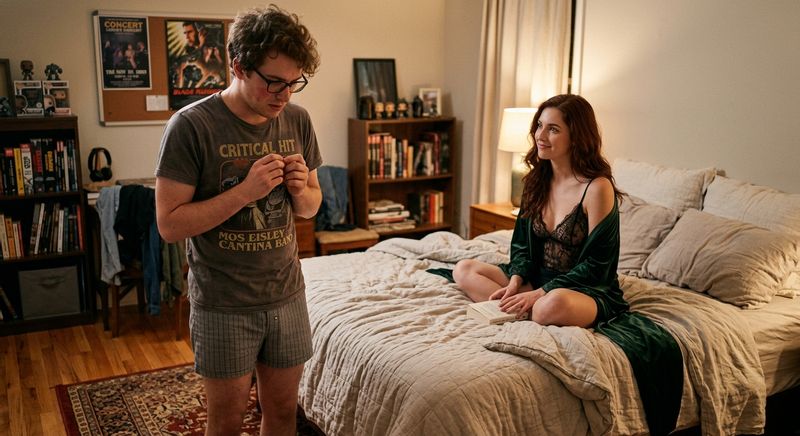
If you're a man in your twenties or thirties dealing with erectile difficulty, you've probably already had the thought: isn't this supposed to happen to older men? I hear this from clients often, usually said with a mix of confusion and quiet shame, as if their body broke some unspoken rule about when this is allowed to happen.
It isn't rare, and it isn't a sign that something is fundamentally wrong with you. Let me walk through what's actually going on.
It's More Common Than the Silence Around It Suggests
Research on this varies depending on how studies define and measure erectile difficulty, but the consistent finding across most of them is the same: a meaningful percentage of men in their twenties and thirties experience this, not just the occasional off night, but a real, recurring pattern. Some studies put the number around one in ten men in this age range. Others, looking specifically at men who seek treatment, find an even higher share are under forty.
The reason it feels so isolating isn't that it's actually unusual. It's that almost nobody talks about it. Men in this age group are supposed to be at their sexual peak, at least according to the cultural script, and admitting otherwise feels like admitting a personal failure rather than describing a genuinely common experience.
Why This Happens More Than People Expect
In younger men, the cause is usually psychological rather than purely physical, though the two are never fully separate. Performance anxiety sits at the center of most of what I see. Stress, whether from work, relationships, or simply the pace of modern life, activates your sympathetic nervous system, and that activation works directly against the parasympathetic state an erection depends on. Add unrealistic expectations shaped by porn or cultural pressure, and you get a mind that's monitoring performance in real time, which interferes with the very thing it's trying to protect.
Lifestyle factors play a real role too. Poor sleep, heavy alcohol use, smoking, and a sedentary routine all affect circulation and hormonal balance in ways that show up here before they show up anywhere else you'd notice. None of this means you're broken. It means your body is responding accurately to the conditions you've been giving it.
When It's Worth Ruling Out a Physical Cause
I want to be honest about something here rather than pretend every case of this is purely psychological. If erectile difficulty is happening consistently, not just in specific situations or with specific partners, but across every context including alone, that pattern is worth having evaluated by a physician rather than assuming it will resolve with breathwork alone. There's also a real, established medical link between erectile difficulty in men under forty and cardiovascular risk, since blood flow issues can show up here before they show up as more visible heart-related symptoms elsewhere.
None of this is meant to alarm you. Most cases in this age group aren't a sign of anything serious. But ruling out a physical cause, especially if the pattern is constant rather than situational, is a reasonable and responsible first step before assuming the cause is purely in your head.
Why "Just Relax" Doesn't Actually Help
If you've been told to just relax, calm down, or stop overthinking it, you already know how unhelpful that advice is. Trying to relax is still trying, and effort is a sympathetic, activating state, the opposite of what your body needs to let go into arousal. The instruction itself often makes the monitoring worse, not better, because now you're also monitoring whether you're relaxed enough.
What actually helps is different from what most advice suggests. It's not about forcing calm. It's about learning to notice the specific sensations of rising arousal and staying present with them, rather than either forcing yourself past the anxiety or getting swept up by it.
What I Actually Work With in Session
Breath comes first in almost every session I do with men dealing with this pattern. Conscious, slowed breathing is one of the only direct tools you have for shifting your nervous system out of that activated, monitoring state in real time. It's simple, and it's also genuinely effective when practiced deliberately rather than left to chance.
From there, I work with the body more broadly, since the bracing that interferes with arousal rarely stays confined to one area. Jaw, shoulders, hips, and pelvic floor often hold the same guarded pattern, and releasing that tension throughout the body tends to do more than focusing narrowly on the specific symptom ever does. If you want a deeper look at the mechanism behind this specific anxiety-arousal cycle, I've written more about performance anxiety and erectile dysfunction here, including what actually helps beyond just being told to calm down.
The piece that tends to matter most, though, is simple to describe and harder to find anywhere else. On my table, you receive touch with no outcome attached to it. Nothing is expected of your body, and nothing goes differently based on how it responds. Your nervous system learns from that kind of repeated, low-stakes experience far more effectively than it learns from advice alone.
You're Not Behind, and You're Not Broken
One of the hardest parts of dealing with this in your twenties or thirties is the sense that you're somehow behind schedule, that your body is failing at something it should be effortlessly good at. That framing does more harm than the actual pattern itself. Your body isn't behind. It's responding, accurately, to stress, expectation, and a nervous system that hasn't yet learned a different way to hold itself in these moments.
If you're weighing whether this kind of somatic work is different from a more conventional massage experience, understanding what actually separates real tantra from an erotic massage is worth reading before you decide what kind of help makes sense for you.
Common Questions
Is this actually common, or am I an outlier? It's genuinely common in this age range, even though it rarely gets discussed openly. You're not an outlier.
Should I see a doctor first? If the pattern is constant across every context, including alone, yes, that's worth having evaluated. If it's specific to certain situations or partners, the cause is more likely psychological and responds well to the kind of work described here.
Does this mean something is wrong with my testosterone or overall health? Not necessarily. Hormonal and health factors can play a role, but in younger men, psychological and lifestyle factors are more often the primary driver.
How long does this usually take to shift? Many men notice a change in body awareness within the first few sessions. More durable shifts tend to build with continued practice rather than resolving all at once.
Where to Start
You don't need to have this figured out before reaching out, and you don't need to already understand exactly why it's happening. I work with men throughout Santa Cruz and the greater Bay Area on exactly this pattern, combining breathwork, somatic bodywork, and honest, judgment-free conversation to help your body find its way back to trusting itself.
Say yes to your pleasure. Say yes to your self. Say yes to your Blissful Awakening.